human susy

A consulting practice founded to support small and medium organisations (20 to 200 employees), profit and non, with AI adoption. The working approach is grounded on human sustainability and translates it into strategy, organisational diagnosis and change management.

Challenges of AI adoption

AI is creating real operational value and customer expectations are shifting fast. But adopting AI at organisational scale, accounting for the impact on people and quality of work, is a challenge most organisations are still figuring out.

Compliance

People are using AI tools on their own initiative, whether or not the organisation has taken an official decision. This creates regulatory exposure (EU AI Act and GDPR) on data processing, transparency and risk classification.

Governance

Effective adoption needs shared rules: when to use AI tools, when to trust their output and how to ensure people stay in control of decisions. Quality standards for AI-assisted work need to be defined and enforced.

Investment

A coordinated approach to AI adoption requires a significant investment of time and money, to learn, experiment, build, deploy and maintain. And has a lot at stake: employee engagement, operational quality, client trust.

People

A successful adoption depends on people engaging with the change. As workflows, workloads and skills evolve, the organisation's long term capacity depends on whether its people grow with the technology.

Methodology

Organisations need a realistic view on benefits, costs, risks and change plan. This should be grounded on the specific organisation reality and vision, and cannot leave change management as an afterthought.

AI adoption requires regulatory compliance, significant investment and careful attention to the people doing the work. It should happen by design, not by accident.

An approach grounded in human sustainability

Most AI consultancies focus on the technology and treat the impact on people as a problem to manage, not the objective of the work. Human susy starts from the people: how can their work be improved? How can their capabilities grow to strengthen the organisation? How can they be involved in the decisions affecting their work? These are the questions that determine whether a transformation delivers lasting value or stalls after the pilot. This approach is grounded in the concept of human sustainability and learn from a library of documented AI adoption cases across industries, what worked, what did not, and why.

How I work

Every engagement starts with understanding the specific context: how is AI used in the organisation, how are people experiencing it and what is the goal of the adoption. From that understanding, I design an action plan that fits the scale of the organisation, its culture and operational reality. The work draws on operational transformation, change management and AI adoption methodology, and it stays driven by outcome and centered on people. Services are structured around three types of engagement: training, diagnostic and transformation.

Diagnosis

A structured assessment of the organisation across three dimensions: processes, data and people. Whether AI adoption is being planned, is underway or has been deployed, the goal is to understand how the three dimensions interact and where the real opportunities and risks are.

Training

Building the judgment, boundaries and practices that enable teams to work with AI effectively and sustainably. Content and format are adapted to the audience and they can be provided both in-person or remote.

Transformation

It starts from the findings of the diagnostics and it includes strategy, support on design, deployment and change management.

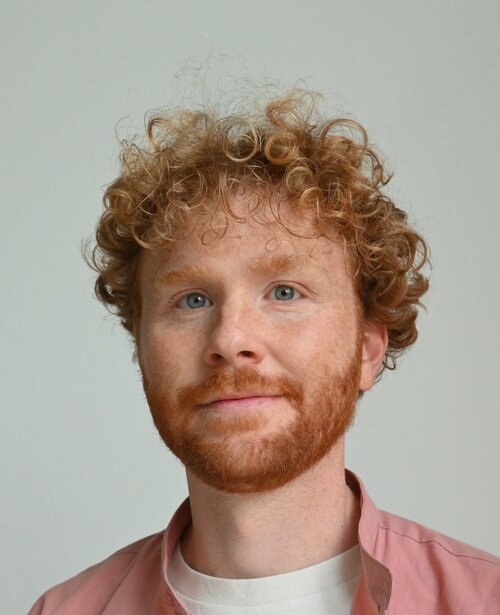
Simone Solazzo

The founder, Simone Solazzo

Based in Eindhoven, Netherlands

I hold a Master of Science in Management Engineering from Politecnico di Milano and spent a decade across management consulting and operations. At sennder, a tech company in logistics, I was head of operational excellence, designing and coordinating tech-driven transformations for the Operations team across Europe.

Leading tech-driven change across a fast-scaling organisation, I saw how operational transformation reshapes the way people work, what is expected of them and how they experience their role. I also saw that the value and success of that change depend on whether the organisation invests it back into the quality of work or only captures it as short term efficiency gain. That conviction led me to spend a year studying human sustainability in depth, researching how organisations have navigated technological change, AI in particular, what determined whether the people inside them grew stronger and how this affected operational and financial performance.

I founded human susy to research and build methodologies to guide organisations with human sustainable developments.

Reach out

You want to start 2027 with a clear plan for AI adoption and a coherent budget behind it? That starts with a conversation about where your organisation is today and where AI can make a difference.

We can have a first conversation of 30 minutes, to understand your situation and see if my approach and services can help. If you would like to read more about the approach or the services, I am happy to share more written information about it.